
Why Self-Leveling Concrete Often Fails in Utah Basements and Cold Storage Rooms
Basements and cold storage rooms are common features in Utah homes, especially in older construction along the Wasatch Front. These spaces are often used for food storage, seasonal items, mechanical systems, or overflow storage—yet they tend to be some of the most vulnerable areas of the home when it comes to water intrusion and uneven concrete floors.
In recent years, many homeowners have turned to self-leveling concrete as a quick fix for wavy, sloped, or uneven basement slabs. On the surface, it makes sense: pour it, let it settle, and enjoy a flatter floor. But when moisture problems exist—and in Utah basements, they often do—self-leveling concrete can fail, crack, and deteriorate far faster than expected.
This blog explains why self-leveling concrete frequently fails in Utah basements, why water control must come first, and how systems like sump pumps and interior drainage protect your home long before cosmetic concrete solutions should be considered.
Why Basement Floors in Utah Become Uneven in the First Place
Concrete basement slabs are rarely poured perfectly flat—especially in older homes. Over time, several Utah-specific factors can make floors worse:
-
Expansive soils that shrink and swell with moisture changes
-
Seasonal snowmelt and spring runoff
-
Poor exterior drainage or grading
-
High groundwater tables in certain neighborhoods
-
Older construction standards with minimal sub-slab preparation
As moisture moves beneath the slab, the soil supporting it can wash out, settle, or shift. This leads to low spots, cracks, and uneven surfaces, particularly in cold storage rooms where floors are often thinner and less reinforced.
When homeowners notice these issues, self-leveling concrete often seems like an easy solution.
What Self-Leveling Concrete Is (and What It Isn’t)
Self-leveling concrete is a cement-based overlay designed to flow across a surface and create a smoother, more level finish. When used in the right environment—dry, stable, and properly prepared—it can be effective.
However, it is important to understand what self-leveling concrete does not do:
-
It does not stop water intrusion
-
It does not waterproof a basement
-
It does not stabilize soil beneath the slab
-
It does not fix drainage problems
In basements and cold storage rooms with active moisture, self-leveling concrete acts more like a sponge than a solution.
Why Self-Leveling Concrete Fails in Basements with Water Issues
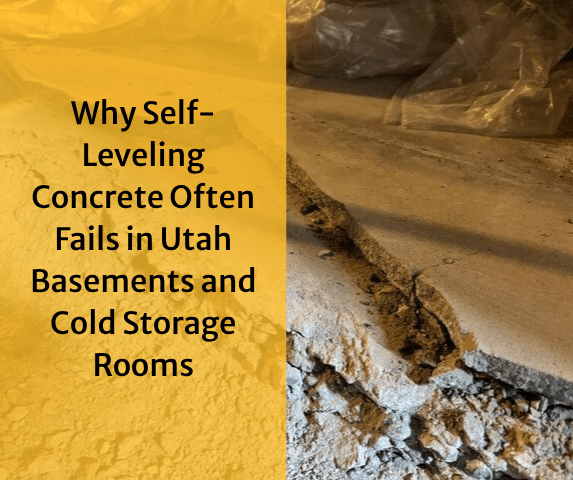
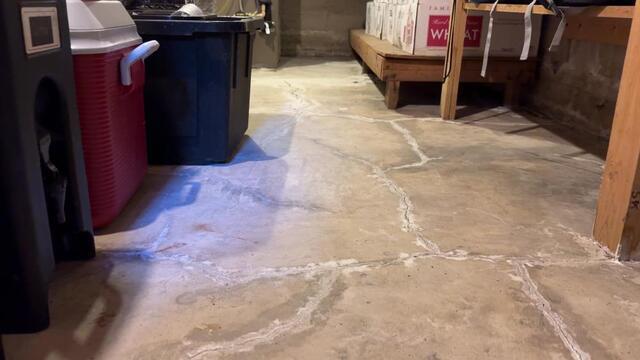
In the Utah home shown in the photos, the self-leveling concrete had already cracked and separated by the time a sump pump installation was underway. The failure wasn’t due to poor workmanship—it was due to uncontrolled water.
Here’s what typically happens:
1. Moisture Wicks Up Through the Slab
Concrete is porous. When groundwater or seepage is present, moisture moves upward through capillary action. Self-leveling products are even more sensitive to this moisture.
2. The Material Softens and Weakens
Repeated exposure to moisture causes self-leveling concrete to lose bond strength. Over time, it becomes brittle, chalky, or unstable.
3. Cracking and Delamination Occur
As water pressure changes beneath the slab, the overlay cracks, lifts, or separates entirely. This creates tripping hazards, loose sections, and visible damage.
4. The Underlying Problem Gets Worse
Because the water issue was never addressed, soil movement continues—causing the slab and overlay to shift even more.
Instead of fixing the problem, the self-leveling concrete simply covered it up temporarily.
Cold Storage Rooms Are Especially Vulnerable
Cold storage areas are common in Utah basements and often present unique challenges:
-
Lower temperatures increase condensation
-
Limited airflow traps moisture
-
Thinner concrete slabs crack more easily
-
Storage items hide early warning signs
When water intrusion is present, these rooms tend to show damage first. Cracking, flaking concrete, and uneven surfaces are often signs of a deeper drainage issue.
Why Water Control Must Come First
Before any concrete leveling, resurfacing, or finishing is considered, water must be brought under control. This is the single most important takeaway for Utah homeowners.
Effective water control solutions may include:
-
Interior sump pump systems
-
Perimeter or trench drains
-
Sub-slab drainage channels
-
Proper discharge away from the foundation
A sump pump doesn’t just remove water—it relieves pressure beneath the slab, protecting both the concrete and the soil below it.
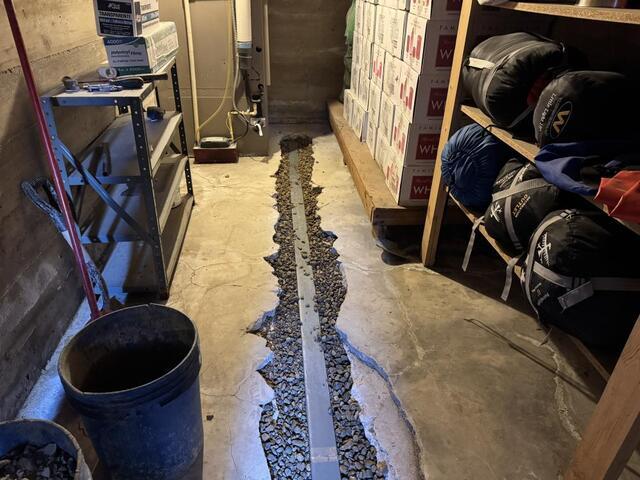
In the project shown, once the slab was opened, the true issue became obvious: water was actively affecting the floor from below. Without drainage, any surface-level fix was destined to fail.
When Self-Leveling Concrete Can Be an Option
Self-leveling concrete isn’t inherently bad—it just needs the right conditions.
Once water is properly managed and the basement environment is dry and stable, self-leveling concrete may be appropriate for:
-
Minor surface imperfections
-
Cosmetic leveling after drainage installation
-
Finishing floors in controlled environments
The key difference is timing. Water control first. Concrete second.
Being Proactive Saves Money and Prevents Damage
One of the most common mistakes homeowners make is waiting until floors are visibly damaged before addressing water problems. By that point, repairs are more invasive and more expensive.
Proactive steps include:
-
Investigating minor floor cracks early
-
Addressing musty odors or damp spots
-
Installing a sump pump before water damage spreads
-
Avoiding cosmetic fixes that hide underlying issues
Taking action early can prevent uneven slabs, failing overlays, and repeated repairs.
Final Thoughts for Utah Homeowners
If your basement or cold storage floor is uneven, cracked, or wavy, it’s rarely just a surface issue. In Utah homes, these signs often point to ongoing moisture problems beneath the slab.
Self-leveling concrete may seem like a quick fix, but without proper water control, it can create bigger issues down the road. Systems like sump pumps and interior drainage address the real cause—protecting your foundation, your concrete, and your home.
The most durable basement floors start with dry conditions and stable soil, not cosmetic solutions.